Hazardous Waste Disposal Areas We Cover

Hazardous and special waste disposal for businesses, laboratories, schools and workshops, with local guidance for London, Manchester, Birmingham, Edinburgh and Glasgow.

HomeHazardous Waste Disposal Areas We Cover

Hazardous Waste Disposal Areas We Cover quote

Hazardous waste disposal by area

Businesses dealing with unwanted chemicals, contaminated materials and other hazardous waste need collections suited to the waste they hold and the premises it is stored at. Requirements can differ depending on the type of waste and whether the collection takes place in England or Scotland.

In England, hazardous waste movements generally require consignment notes, with records retained for three years. The Environment Agency regulates hazardous waste activities in England. In Scotland, hazardous waste is known as special waste and is regulated by SEPA. Special waste consignment notes use unique codes obtained from SEPA. Some movements into or out of Scotland also require advance notification to SEPA, subject to applicable exemptions.

For regulatory details, see the GOV.UK hazardous waste overview and NetRegs guidance on moving hazardous and special waste.

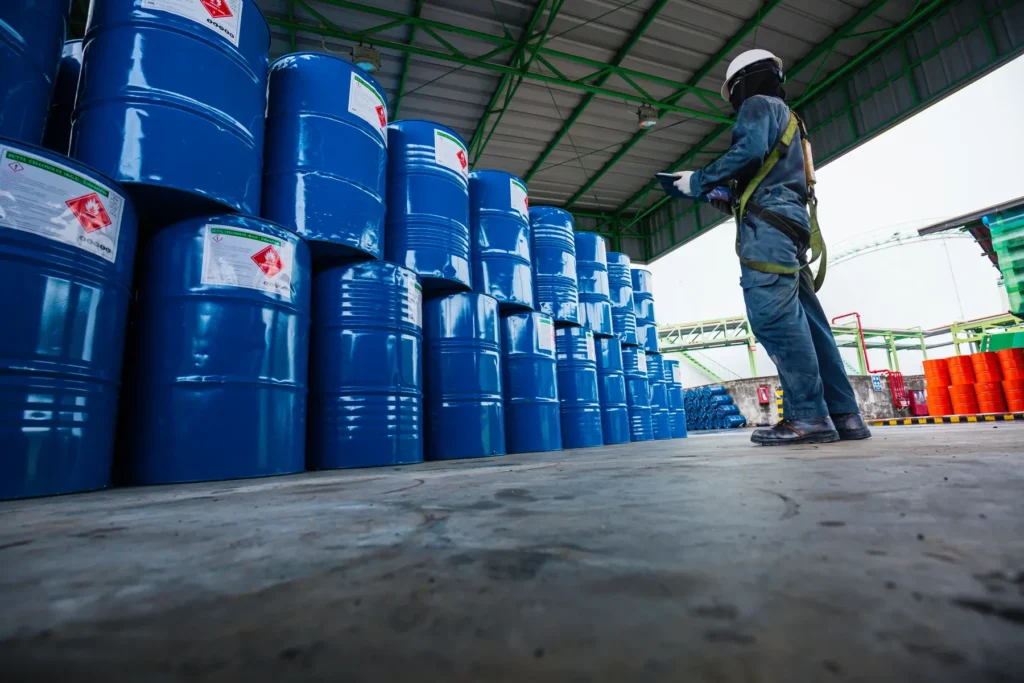
A worker in a hard hat and harness holding a clipboard beside rows of stacked blue drums with hazard labels under a warehouse canopy

England

Hazardous waste rules, Environment Agency regulation and English consignment notes.

Scotland

Special waste rules, SEPA regulation and SEPA-coded consignment notes.

Business waste

Commercial, laboratory, school and workshop waste rather than household collections.

Cities we cover

Select your nearest listed city for information about hazardous waste disposal in that area, including collection considerations, relevant waste types and local requirements.

  • Hazardous waste disposal London: laboratory chemicals, unwanted chemical stocks and waste stored in shared buildings. Access considerations can include basements, loading bays and restricted collection points.
  • Hazardous waste disposal Manchester: chemical drums, intermediate bulk containers (IBCs), process residues and chemicals held in older industrial premises or stores.
  • Hazardous waste disposal Birmingham: waste chemicals from garages, engineering businesses, metal finishing operations and jewellery workshops. Different waste streams may need separate identification and handling.
  • Hazardous waste disposal Edinburgh: unwanted laboratory and school chemicals, Scottish special waste consignment requirements and cross-border movement notification where applicable.
  • Hazardous waste disposal Glasgow: industrial process waste, chemical containers, batteries, waste classification and SEPA special waste consignment requirements.
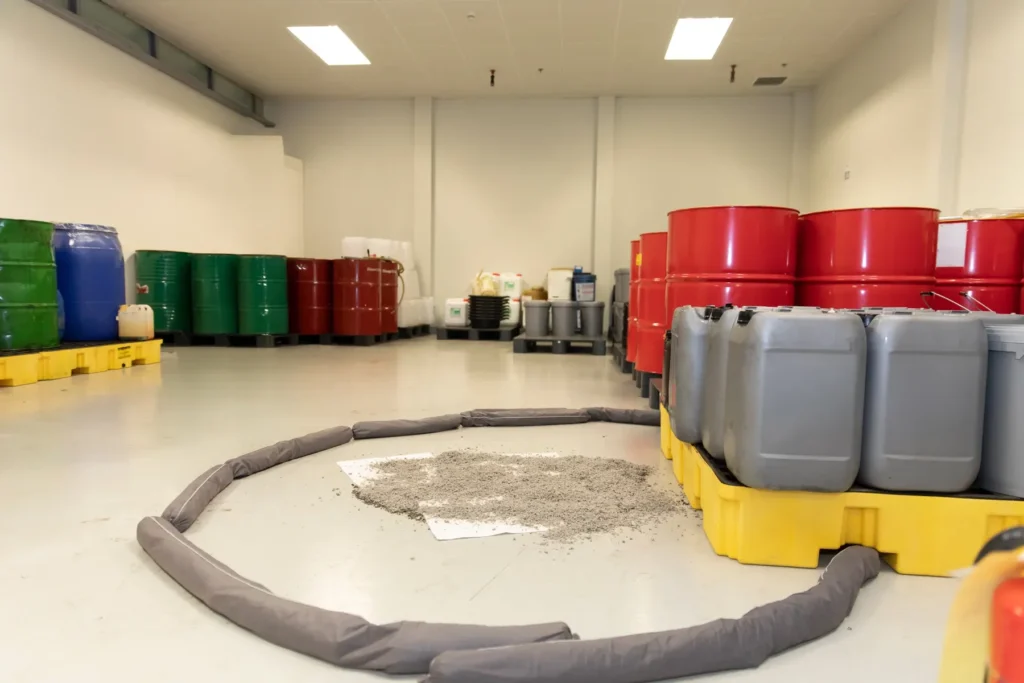
A ring of absorbent booms around granules on a storeroom floor, beside drums and grey jerrycans on yellow spill pallets

Hazardous waste to clear from your premises?

Tell us where the waste is, what it is and how it is stored, and we will come back to you.

Business chemical waste collection

Chemical and hazardous waste can come from routine business activities, maintenance, production work or a clear-out of materials that are no longer needed. It may include unused chemicals, spent solvents, cleaning products, chemical residues and contaminated containers. The appropriate collection and disposal arrangements depend on what the materials contain and how they have been stored.

For premises with several types of waste, an inventory helps establish which materials need collecting. Product labels, container sizes, quantities and available safety data sheets can help identify the contents. Waste produced through a process may also need information about how it was generated, particularly where substances have been mixed or their original composition has changed.

Collection arrangements also depend on access to the waste. Drums stored at ground level may present different handling considerations from chemicals kept in a basement, laboratory cupboard or restricted loading area. Container condition and the location of the collection point are relevant details when discussing a collection.

Where waste is being removed from a laboratory, workshop, warehouse or industrial site, the objective is to establish what needs collecting and the appropriate arrangements for its transfer and disposal. Our hazardous waste disposal information explains the service in more detail, while hazardous waste collection covers collection considerations.

Elsewhere in the UK

The city pages above cover the listed locations in England and Scotland. If your premises is outside these areas, tell us its location and the type of waste involved so your requirements can be considered.

It is helpful to provide the waste description, approximate quantities, container types and any available product information. If some materials are unidentified, describe them as unknown rather than assuming what they contain. This gives a clearer picture of the waste requiring assessment.

Hazardous Waste Disposal Areas We Cover: common questions

Is hazardous waste handled the same way in England and Scotland?

The principles are similar but the rules differ. England uses hazardous waste consignment notes regulated by the Environment Agency. Scotland calls it special waste, regulated by SEPA, and every consignment note carries a SEPA unique code. Movements of special waste into or out of Scotland generally require pre-notification to SEPA, although exemptions apply.

Do councils collect hazardous waste from businesses?

Council household hazardous waste services are set up for residents. Waste from a business falls under the business's duty of care, which means a registered carrier, the correct consignment note and a facility authorised to accept the waste.

What should we prepare before asking about disposal?

A list of items with product names, quantities and container sizes, any safety data sheets, a note of how spent or mixed waste was produced, the condition of containers and access details for the collection point. Unknown items should be marked as unknown rather than guessed.

Chemical Waste Disposal

Services

Request a quote

Menu

Get a quote