When a load is rejected
A receiving facility may reject hazardous waste if the description or consignment documentation is incorrect, or if the facility is not authorised to accept it. In England, the carrier must immediately telephone the Environment Agency and contact the producer or holder for further instructions.
The producer or holder must decide whether the waste should go to another authorised receiving site, return to the original premises where permitted, or be offered again to the rejecting facility once the reason for rejection has been addressed. The producer or holder must also telephone the Environment Agency to report that decision. A new consignment note is required, with an R added to the appropriate original or rejection reference.
Returning waste to its original premises is not always permitted, including where waste from different producers has been mixed. The GOV.UK hazardous waste rejected loads guidance explains the requirements for each option. Accurate waste descriptions and suitable receiving facilities help reduce the risk of rejection.
United Utilities and trade effluent
United Utilities is the sewerage undertaker for Greater Manchester. Discharging trade effluent, which may include certain tank washings and process waters, into a public sewer requires the sewerage undertaker’s consent. The composition of the liquid and the conditions of any existing consent are relevant when deciding whether discharge is permitted.
Liquids that cannot be discharged under an appropriate consent may need to be managed as waste. Their composition, contamination and classification determine the collection and disposal arrangements required.
Information needed for hazardous waste collection
For a Manchester business arranging a one-off clearance or regular hazardous waste collections, the following information helps establish the waste type, quantity and collection requirements:
- Product names or a description of each waste stream and the process that produced it
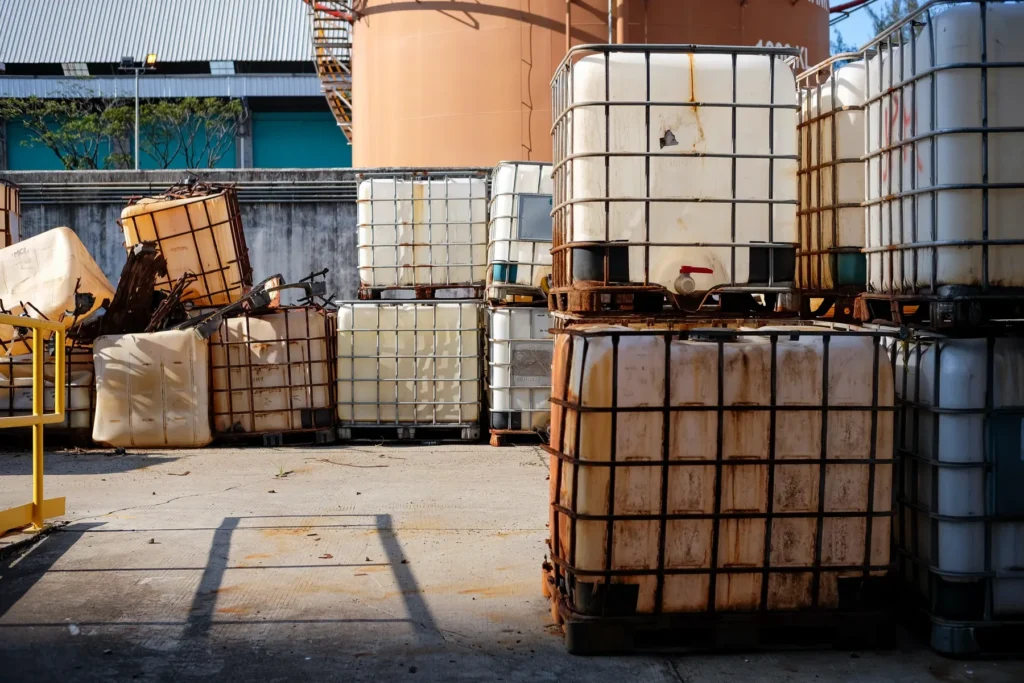
- Container types and sizes, including drums, IBCs, jerrycans or smaller packs
- Approximate quantities and whether the waste is a one-off clearance or arises regularly
- Container condition, including any damaged packaging or unidentified contents
- Whether a forklift or pallet truck is available and the vehicle access to the loading point
- Any safety data sheets, process records or analysis results already available
These details help distinguish straightforward packaged chemical waste from mixed, unidentified or bulk materials that may need additional assessment before collection.
Manchester falls within the Environment Agency’s Greater Manchester, Merseyside and Cheshire area. For other locations, see hazardous waste disposal in Birmingham or our full list of areas we cover.