

Acid waste should be identified by more than a corrosive symbol. Different acids and mixtures can have very different properties, and spent process liquids may contain dissolved metals or other contaminants. We establish the identity, concentration and current composition before collection.
Acid Disposal
Acid disposal for unused products and spent acidic process liquids that need controlled handling and treatment.
HomeAcid DisposalAcid Disposal enquiry
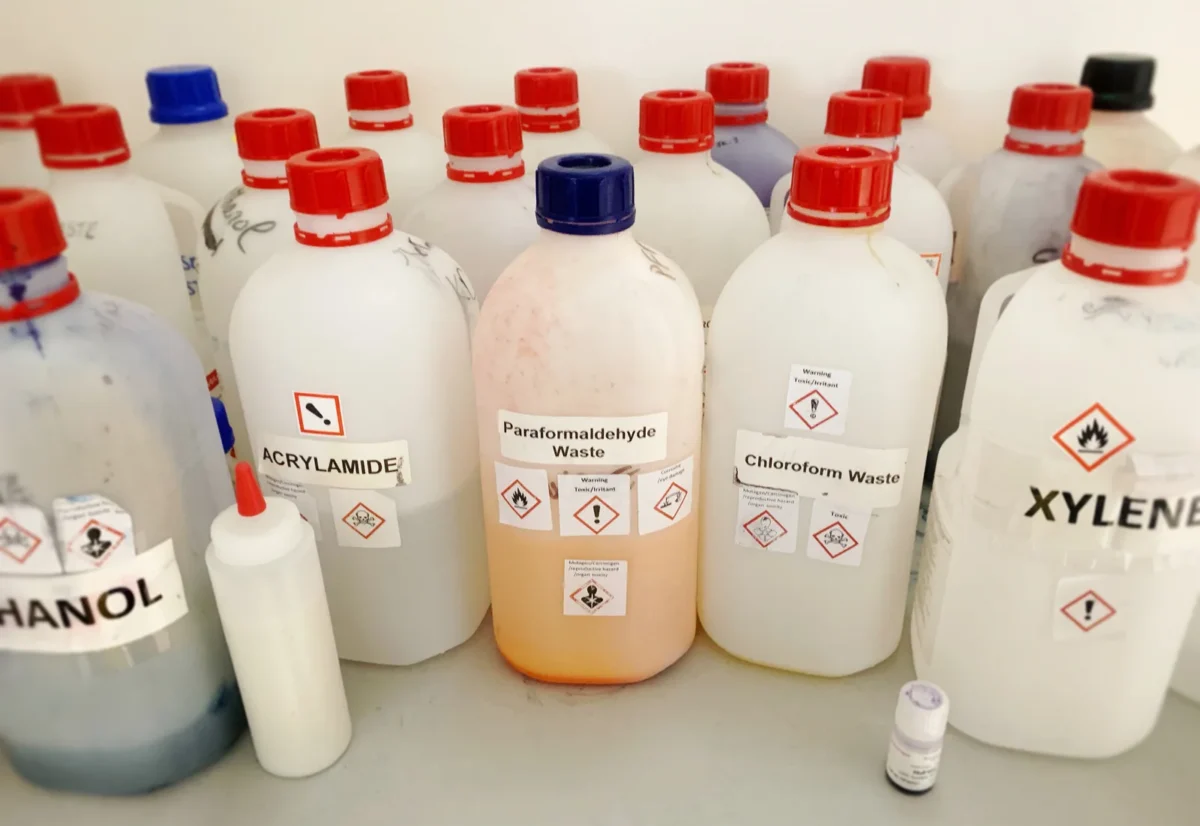
Spent-acid composition
Dissolved metals and process residues can materially change an acidic waste.
Acid and alkali segregation
Acids and alkalis should remain separate unless they enter a properly controlled neutralisation process.
Concentration and process contamination
A safety data sheet can describe the original acid, but a used cleaning or pickling solution may contain substances introduced by the process. Dilution does not automatically make the waste non-hazardous. Where the identity is uncertain, that uncertainty should remain explicit until suitable evidence resolves it.
Contact us about acid disposal
Complete the form and we will get back to you.
Segregation and reaction risks
Waste acids and alkalis should remain separate before collection. Neutralisation can generate significant heat, gases or other hazardous reaction products and belongs in a properly controlled treatment process. Compatible containment is also essential while acids are stored and moved.
Unknown acidic liquids
Existing product and process information may allow an acidic waste to be identified without opening or testing an uncertain container casually. If that information is not enough, further appropriate assessment is needed. Until the mixture is identified, the waste description should continue to record that uncertainty.
Acid Disposal: common questions
Can acid be neutralised with another waste before collection?
Not as an improvised disposal method. Neutralisation can generate heat and hazardous reaction products and requires a controlled treatment process.
Is dilute acid automatically non-hazardous?
No. Classification depends on the composition and properties of the waste, including contaminants introduced during use.
Can an unknown acidic liquid be collected as a named acid?
The uncertainty must remain explicit until appropriate assessment establishes a defensible waste description.
Does a corrosive label identify the exact acid?
No. Different acids and mixtures can share that hazard indication.
Can dissolved metals affect spent-acid disposal?
Yes. Process contaminants form part of the current waste composition and acceptance assessment.