Hazardous Waste Disposal London

Hazardous waste disposal for London businesses, from laboratory chemicals and workshop solvents to cleaning stock left in shared buildings, with waste identification, classification and collection requirements considered before removal.

HomeHazardous Waste Disposal London

Hazardous Waste Disposal London quote

Commercial hazardous waste in London

If your London premises has chemicals, solvents, oils, aerosols or contaminated materials to clear, an accurate description of the waste is needed before collection. Product information, inventories and safety data sheets can help establish what each item contains, how it should be classified and what packaging is suitable. Waste codes, hazardous properties and consignment documentation depend on the waste being collected.

The borough councils run household waste services for residents. Waste produced by a business is that business’s responsibility under the duty of care, whether it comes from a university laboratory, a dental practice, a print room, a garage or a facilities team clearing out a cleaning store. Business hazardous waste must be handled through appropriately authorised waste carriers and facilities.

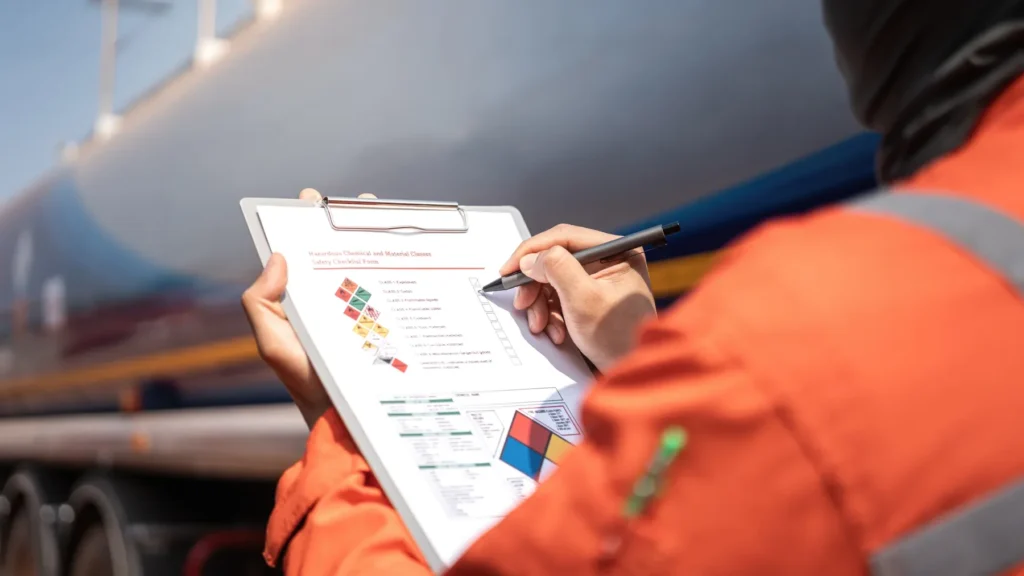
A person in orange overalls filling in a hazardous materials checklist on a clipboard beside a road tanker

Waste inventory and identification

Product details, container information and available safety data help establish the contents and classification of each waste item.

Shared-building responsibilities

Clarify who holds the waste and who is responsible for consignment documentation and records.

Access planned early

Basements, lifts and loading arrangements considered before collection day.

Who is responsible for waste in a shared building?

London business premises can involve several parties: offices above shops, multi-let laboratory buildings and estates run by a managing agent. The rules in England distinguish between the producer, whose activity created the waste, and the holder, who stores or possesses it. Both have responsibilities. When a former tenant has left chemicals in a basement store, or a fit-out contractor has left part-used products behind, the current holder needs to establish what waste is present and who is responsible for its removal. The relevant producer or holder completes parts A and B of the hazardous waste consignment note. The parties involved should also establish who will retain the required records.

Planning a collection around the building

In central London the building can affect the collection as much as the waste itself. Basement stores, goods lifts, loading bay booking, building management rules and loading restrictions on the street outside all affect how containers can be brought out and loaded. Floor level, corridors and stairs, lift dimensions and any booking requirements are useful details when discussing a collection. Narrow staircases, restricted service entrances and containers stored away from vehicle access may also need consideration.

Laboratory and small-container clearances

Universities, hospitals, research buildings and schools may have hazardous waste stored in numerous small containers rather than a few drums. Old reagents, part-used bottles and unlabelled samples need appropriate identification and classification. Chemicals that could react dangerously with one another must be kept apart during storage and packing. A list of product names, container sizes, quantities and available safety information helps establish what is present. Unidentified substances need further assessment rather than being treated as ordinary chemical waste. See laboratory waste disposal for more on packing and segregation.

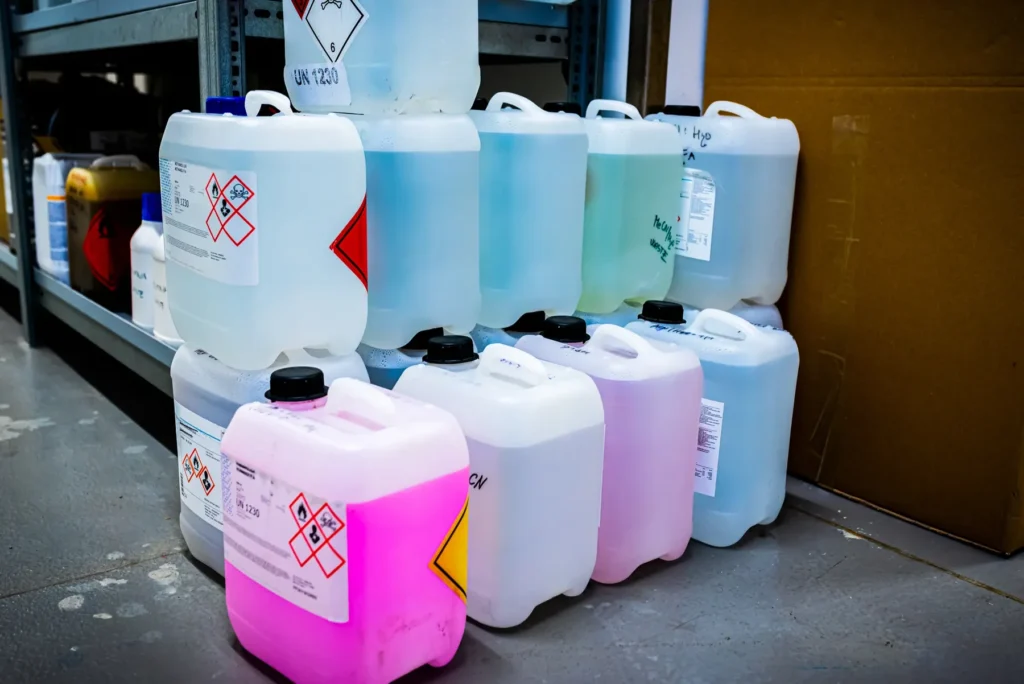
Stacked plastic jerrycans of coloured liquids with hazard diamond labels on the floor beside metal shelving

Clearing hazardous waste from London premises?

Send us your list of chemicals, quantities and access details and we will come back to you.

Consignment notes and records in England

The Environment Agency regulates hazardous waste in England, and London falls across its Hertfordshire and North London area and its Kent, South London and East Sussex area. Hazardous waste leaving your premises must travel with a consignment note until it reaches its final destination. As producer or holder you need the SIC (2007) code for the activity that produced the waste and the List of Waste code for the waste itself. The relevant producer or holder completes parts A and B of the note. Records including consignment notes, consignee returns and applicable carrier schedules or rejected load records form the hazardous waste register. Producers and holders must keep the register for three years at the premises that produced or stored the waste. Our guide to the hazardous waste consignment note explains the different sections.

Sinks, drains and Thames Water

Thames Water is the sewerage company for most of London. Discharging trade effluent into a public sewer requires consent from the relevant sewerage undertaker. A consent applies to the discharges and conditions it specifies; it does not provide general permission to dispose of unwanted chemicals down a sink or drain. Spent laboratory chemicals, solvents and process liquids that cannot lawfully be discharged need appropriate waste management. The substance, its classification and the conditions of any existing consent determine how it should be handled.

What to have ready for a collection

  • A list of items with product names, approximate quantities and container sizes
  • Safety data sheets for products, and a note of how any spent or mixed waste was produced
  • The condition of containers, including leaking closures, swollen drums or corroded tins
  • Labels that match the contents, with anything unknown marked as unknown
  • Access details: floor, lift dimensions, loading bay and parking arrangements

These details help establish the waste classification, packaging requirements and arrangements for hazardous waste collection to a facility authorised to accept the relevant waste. Outside the capital, see hazardous waste disposal in Birmingham or the full list of areas we cover.

Hazardous Waste Disposal London: common questions

Will my London borough council take hazardous waste from my business?

Council household hazardous waste services are set up for residents. Waste produced by a business falls under the business's own duty of care. Hazardous waste must be classified, stored appropriately, transferred using a registered waste carrier and sent to a facility authorised to accept it. The relevant consignment note must also be completed.

Can we pour spent chemicals down the sink at our London premises?

Trade effluent discharged into a public sewer requires consent from the relevant sewerage undertaker, which is Thames Water for most of London. Any consent has conditions governing what may be discharged. It does not automatically cover spent chemicals, solvents or other unwanted liquids. Substances that cannot lawfully be discharged must be managed through an appropriate licensed waste disposal.

Who signs the consignment note when a former tenant has left chemicals behind?

The producer is the person whose activity created the waste, while the holder is the person currently storing or possessing it. A landlord or managing agent holding chemicals left by a former tenant may have holder responsibilities even though they did not produce the waste. The relevant producer or holder completes parts A and B of the consignment note. The consignor, who hands the waste to the carrier, checks the completed information and signs part D when the waste is collected.

Do we need a safety data sheet for every item?

Safety data sheets help identify the original product, so provide any available documents. They may not accurately describe waste that has been used, diluted or mixed, so details of how the waste arose are also useful. Unlabelled items or substances without reliable identification require further assessment before suitable collection and disposal arrangements can be established.

What counts as hazardous waste for a London business?

Hazardous waste is waste containing substances or displaying properties that make it hazardous under the applicable classification rules. GOV.UK gives examples including brake fluid, print toner, batteries, solvents, pesticides, non-edible oils, asbestos and containers that held hazardous substances. Not every example is automatically hazardous in every circumstance. The waste's composition and properties must be assessed using the relevant List of Waste entries and WM3 classification guidance.

Chemical Waste Disposal

Services

Request a quote

Menu

Get a quote