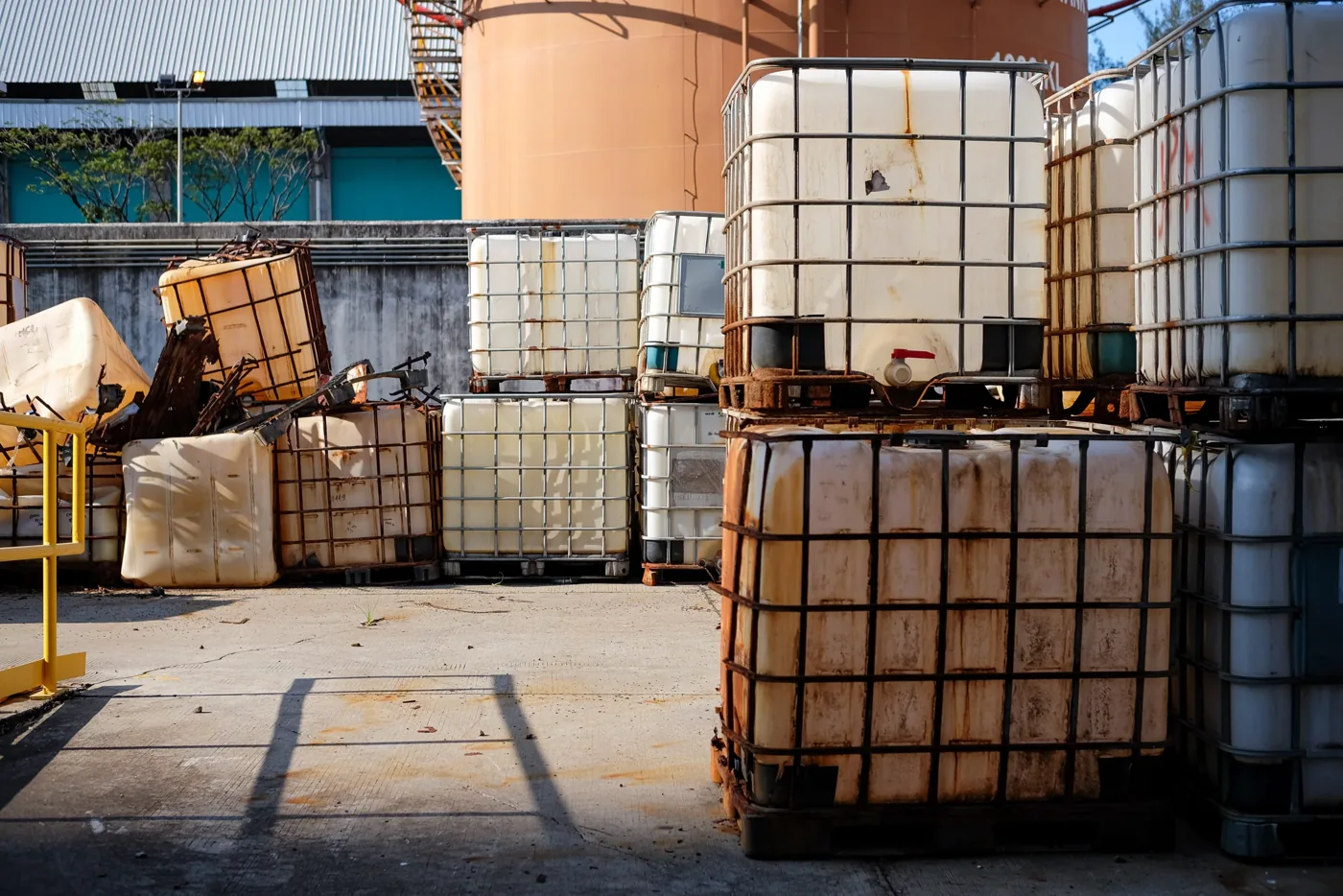
Used intermediate bulk containers (IBCs) can sometimes be recycled even when chemical residue remains inside. The outcome depends on what the container previously held, how much material remains, whether contamination can be managed through an appropriate treatment process and the condition of the IBC itself. An empty-looking container is not necessarily clean, and the presence of residue does not automatically rule out recovery.
Record previous contents and remaining residue
The first useful distinction is between an IBC containing a small quantity of identified residue and one holding an appreciable volume of unused or waste product. Both need assessment, but they may require different handling and receiving arrangements.
Start with the previous chemical contents. A product label, purchase record, safety data sheet or manufacturing inventory may establish what was originally stored. Where several products have passed through the same container, that history matters more than the latest label alone.
For each IBC, record:
- The previous product name and known composition.
- Whether remaining material is liquid, sludge, sediment or dried residue.
- The approximate amount remaining, based on existing records or safe external observations.
- Whether any other substances have been added.
- Whether the original closure and identification are intact.
This information helps distinguish the container from the material inside it. If the remaining product is waste, assess its composition and hazardous properties separately from the container. An IBC containing a substantial quantity of discarded chemical is not necessarily just empty contaminated packaging. The distinction affects its waste description and the receiving facility’s acceptance decision.
The Environment Agency’s waste classification guidance explains why businesses need an accurate description before waste is sent for recycling or disposal in England.
Evaluate container damage and contamination
Physical condition can be as significant as chemical history. A sound IBC with identified previous contents may be suitable for further recovery assessment. A cracked inner bottle, distorted cage, defective outlet or evidence of leakage can restrict the available handling and recovery options.
Check the available records against the external condition of the container. Photographing accessible labels, fittings and visible damage can clarify the inventory without opening or disturbing unknown contents.
A sound outer cage does not establish that the inner bottle is suitable for another use. Similarly, a damaged outlet may affect transport and treatment arrangements even if the remaining substance is well identified.
Where several IBCs have been accumulated, avoid treating the group as one uniform waste stream merely because the containers look identical. A former detergent container and an IBC used for a hazardous solvent may require quite different assessments.
What determines the appropriate receiving route?
There are several possible outcomes after assessment. An IBC might be suitable for specialist cleaning and reconditioning, its components might be recoverable after appropriate treatment, or the container and remaining contents might need a waste-treatment route.
Recovery suitability depends on the receiving facility’s acceptance criteria as well as the container’s actual condition. It cannot be determined from the phrase ’empty IBC’ alone.
The Environment Agency’s packaging waste classification guidance identifies 15 01 10* for empty packaging contaminated with hazardous substance residues, including IBCs. Non-hazardous packaging residues require a different assessment and an appropriate material-specific code. Where contamination prevents a suitable recovery route, the container and remaining material need an accurately described waste-treatment arrangement. The distinction is examined further under contaminated packaging disposal.
For an IBC clearance, prepare a container-by-container schedule rather than a single estimated total. Identify known contents, separate uncertain entries in the records and note any damage that could affect handling. A quantity expressed as both number of containers and estimated remaining contents gives a more useful picture than the number of pallets alone.
The IBC Recycling service page covers assessment of used containers for suitable recovery arrangements. A useful clearance schedule identifies which containers have sufficient information for a recovery assessment, which require a different waste-treatment route and which remain unresolved because their contents or condition cannot yet be established.