Already removed asbestos cement sheets and asbestos insulation waste do not necessarily need identical collection preparations. Both require appropriate asbestos waste containment and an authorised receiving route, but the material’s condition, likelihood of releasing fibres, packaging and accompanying contaminated waste can change the collection requirements.
For a building owner or facilities manager arranging disposal after asbestos removal, the first decision is whether the waste is intact, identifiable and properly contained. The fact that it has already been removed does not establish that it is ready for collection.
Why is asbestos cement different from insulation waste?
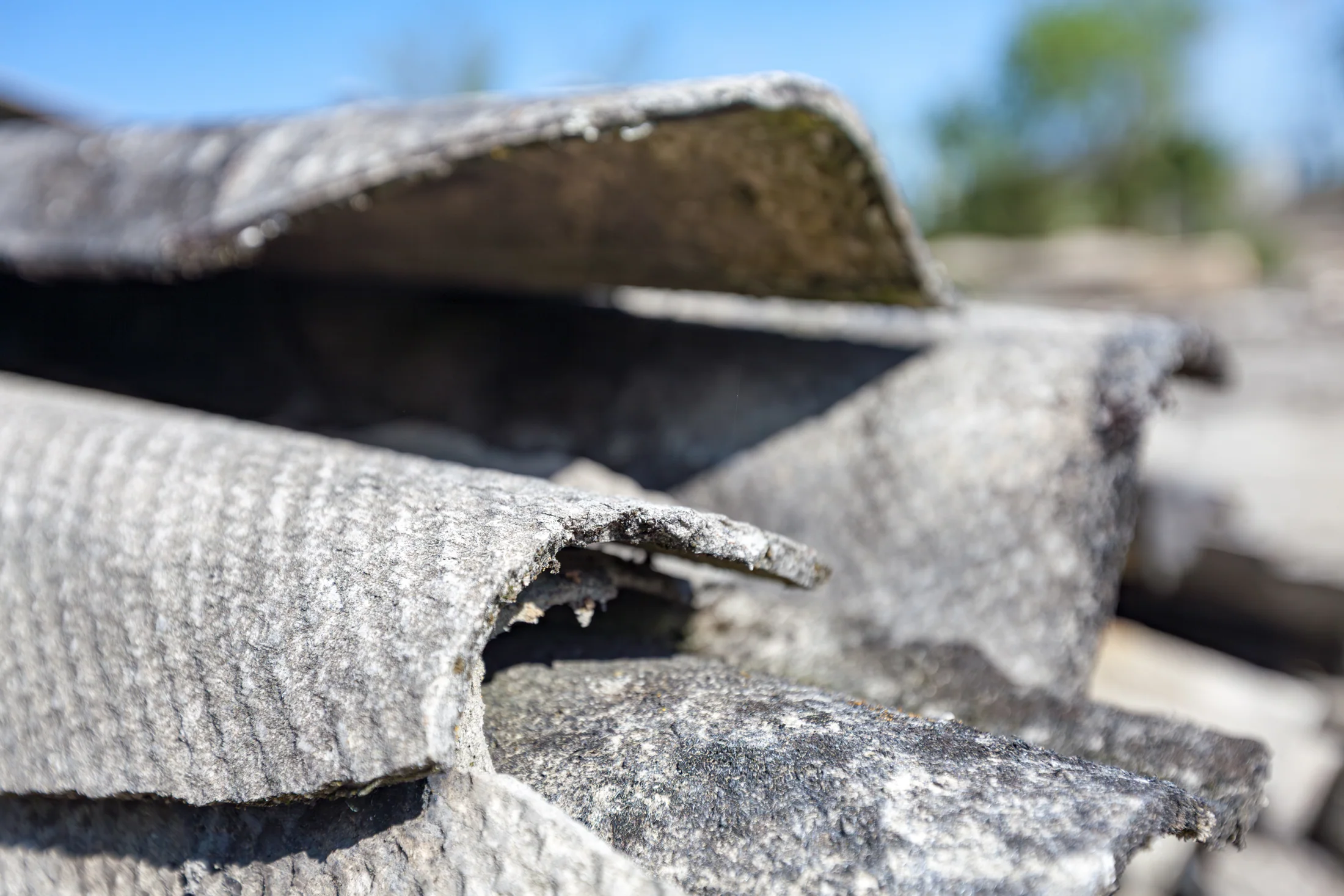
Asbestos cement contains fibres bound within a cement matrix. Intact sheets and similar products generally retain their shape and are less likely to release fibres than loosely bound asbestos-containing insulation when disturbed.
Insulation materials can be more friable, meaning they can crumble or release fibres more readily. The amount of damage and the original product type therefore matter when assessing the waste.
The Health and Safety Executive’s guidance on non-licensed asbestos work explains how the material type, condition and extent of disturbance influence the classification of removal work.
This distinction affects the work that should have taken place before collection. Removing intact asbestos cement can fall within non-licensed work under suitable circumstances, whereas removal of higher-risk insulation materials will frequently require a licensed contractor.
That is a removal-work distinction, not permission to place asbestos cement in general building waste. Once discarded, the resulting asbestos-containing material still needs appropriate waste management.
Should intact asbestos cement sheets be broken into smaller pieces?
No. Intact sheets should not be broken merely to make them fit a bag or vehicle. Breaking asbestos cement can release fibres and produce smaller pieces and contaminated dust that are more difficult to contain.
HSE’s Disposal of asbestos waste guidance explains that intact asbestos cement sheets should be carefully double-wrapped in suitable polythene sheeting and labelled, rather than broken into smaller pieces.
For a clearance involving previously removed roof sheets, establish their approximate dimensions, quantity and current packaging condition. A collection described only as ‘one pallet of asbestos’ may conceal long sheets, broken fragments and other material needing different arrangements.
Where sheets have already been broken during authorised removal work, the inventory must describe the resulting pieces and debris rather than pretending the original panels remain intact.
What if the asbestos waste is loose, dusty or damaged?
Loose insulation waste, damaged asbestos-containing board and dust-contaminated debris present different containment challenges from complete cement sheets. The collection assessment needs to reflect those existing conditions.
HSE identifies contaminated building materials, disposable personal protective equipment, cleaning rags and equipment that cannot be decontaminated as potential asbestos waste. These materials can form separate identifiable packages within the same removal project.
For example, a completed refurbishment might leave wrapped sections of removed board, sealed bags of associated debris and packaged disposable protective materials. Counting only the original building components would understate the actual waste requiring disposal.
A practical inventory should identify:
- The original asbestos-containing material, using available survey or removal records.
- Whether each package contains intact sheets, fragments, insulation or contaminated debris.
- The number of packages and their approximate size or weight, where known.
- Any visible damage to existing wrapping, bags or closures.
- Whether contaminated disposable items are included.
- The current storage area and the route by which packages can be collected.
If wrapping has been compromised, record that condition and arrange appropriate assessment before routine collection. Opening packaging merely to confirm the contents can disturb material that should remain contained.
Does removal licensing determine the disposal destination?
No. The competence and licensing requirements for asbestos removal are separate from the authorisation required for a receiving waste facility.
A contractor may lawfully carry out a particular non-licensed asbestos cement removal task, but that does not mean the resulting waste can enter a general rubble skip. Equally, removal by a licensed contractor does not automatically establish that every proposed waste destination is authorised to receive the resulting material.
In England, the Environment Agency’s landfill disposal guidance explains that construction materials containing asbestos and other suitable materials may be accepted at a hazardous waste landfill or a separate asbestos cell within a non-hazardous landfill, subject to the applicable acceptance conditions.
The intended facility must be able to accept the particular classified waste. There is a difference between choosing a lawful destination and proving that an individual site can accept the load described.
What paperwork accompanies asbestos waste?
Waste classification and movement records need to describe the actual asbestos-containing material. England’s hazardous waste requirements apply where the waste is classified as hazardous, including the applicable consignment documentation.
The government’s hazardous waste consignment note guidance identifies the producer or holder, carrier and consignee responsibilities. The waste description and classification code must match the material moved.
For more detail about the required movement paperwork, see our hazardous waste consignment note guide.
For disposal planning, ask for the existing asbestos survey or relevant removal records, the waste classification information and the number of packaged waste units. These records help the contractor assess the load without unnecessarily disturbing wrapped materials.
Do not substitute a description such as ‘construction debris’ when the load contains asbestos cement or asbestos-contaminated insulation. The original source, material type and actual waste characteristics are relevant to classification.
How do access and packaging affect collection arrangements?
For already packaged asbestos waste, the proposed route from storage to collection vehicle matters. Long cement sheets, sealed bags of smaller debris and bulky wrapped materials may have different handling needs.
Consider whether packages must pass through narrow doorways, across uneven surfaces or around equipment that could tear the containment. A package that can be stored securely in one location may not be suitable for movement along the originally proposed route.
The collection enquiry should therefore explain the storage location, package sizes, any visible containment defects and whether mechanical handling or restricted access is relevant.
Similarly, an asbestos clearance following a building refurbishment may involve several separately prepared groups of waste. Distinguish material already packaged and awaiting removal from asbestos-containing items that remain installed. Only the former falls within an ordinary packaged-waste collection enquiry.
What should be confirmed before requesting a collection quote?
Prepare a concise schedule showing what was removed, how it is currently contained, its quantity and any outstanding packaging or identification issues. A photograph of externally visible wrapping and the storage area can help describe access without opening the packages.
For collection and disposal of asbestos waste that has already been removed and suitably contained, see our asbestos disposal service.
The key decision is whether the material has genuinely reached a condition suitable for assessment and collection. Intact asbestos cement sheets, loose insulation waste and contaminated debris may arise from one project, but their distinct physical characteristics should remain visible in the collection specification.