Hazardous Waste Disposal Manchester

Hazardous waste disposal for Manchester factories, industrial units, workshops and laboratories with drums, IBCs, process residues or old chemical stock to clear.

HomeHazardous Waste Disposal Manchester

Hazardous Waste Disposal Manchester quote

Industrial hazardous waste across Greater Manchester

Businesses in Manchester may need to dispose of drums of spent solvent, IBCs containing wash water or off-specification product, residues from tank cleaning and chemicals that are no longer needed. These wastes need to be identified and described correctly so that suitable collection and disposal arrangements can be made. This applies to industrial premises in Trafford Park as well as workshops, schools and laboratories elsewhere in Greater Manchester.

Household recycling centres are not intended for business hazardous waste. Businesses must meet their waste duty of care obligations and arrange for waste to be transferred to an appropriately authorised operator. The GOV.UK guidance for hazardous waste producers and holders explains the responsibilities involved.

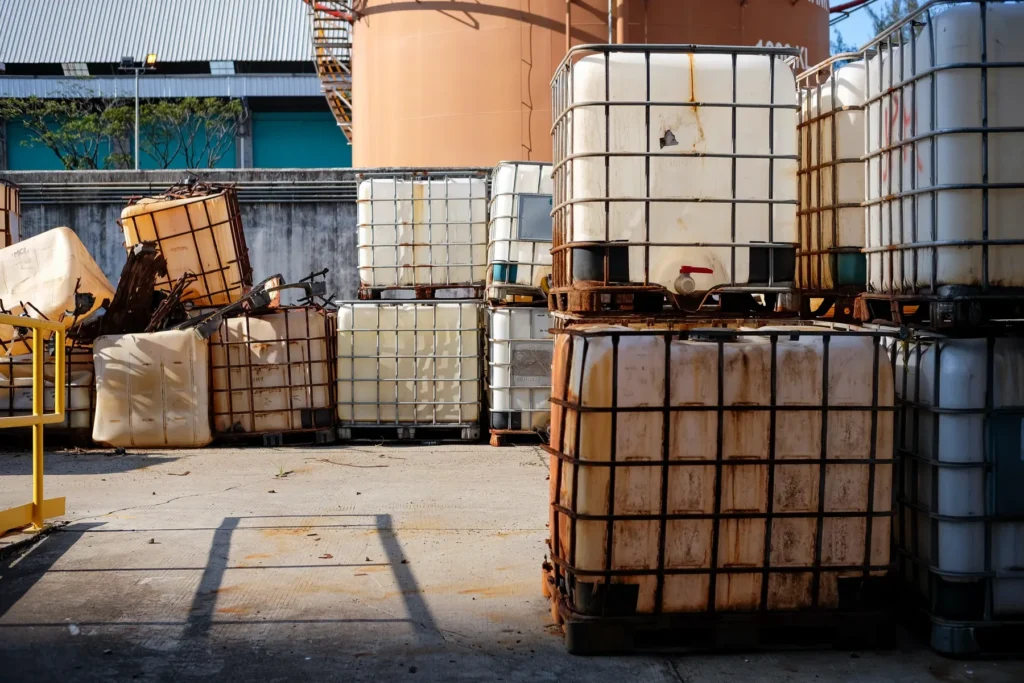
Used intermediate bulk containers in metal cages, some stained and rusted, stacked in an outdoor industrial yard

Container condition matters

Damaged drums and IBCs may need additional assessment before collection arrangements are confirmed.

Residues described properly

Process waste is classified from its source and composition, not the raw material sheet.

Old chemical stores

Unidentified chemicals found in older buildings may need assessment before packaging and collection.

Drums, IBCs and bulk liquids

With bulk containers the condition of the container matters as much as the contents. A corroded drum, a split IBC cage or a leaking valve changes how the load can be handled. A container described as empty may still hold enough residue to be classified as hazardous waste in its own right.

Useful details include the container type, roughly how full each one is, what it last held and whether any containers are damaged. These help establish whether the waste can be collected in its existing packaging or requires further assessment. See chemical drum disposal and IBC recycling for information about the different container types.

Process residues and off-specification stock

Production waste is often the hardest to describe. A safety data sheet covers the original product, not necessarily a sludge from a mixing vessel or a batch that failed quality control. Under the WM3 waste classification guidance, classification depends on the source of the waste, its composition and its hazardous properties.

Process records, product information and details of any chemicals added during production can help establish the composition. Where those records do not provide sufficient information, representative sampling and analysis may be necessary. This is particularly relevant to mixed residues, contaminated wash water and materials whose composition has changed during processing. There is more on this under industrial chemical waste disposal.

Older mills and industrial buildings

Conversion and refurbishment of older buildings around Manchester can uncover chemical stores left by previous occupiers. These may contain unlabelled tins, corroded drums, obsolete cleaning products or materials with no surviving documentation.

When the original producer cannot be traced, the business now holding the waste still has responsibilities as a waste holder. Photographs of the storage area, surviving labels and an approximate container count can help with the initial assessment. Where contents cannot be identified reliably, further investigation may be required before packaging, collection and disposal arrangements can be confirmed.

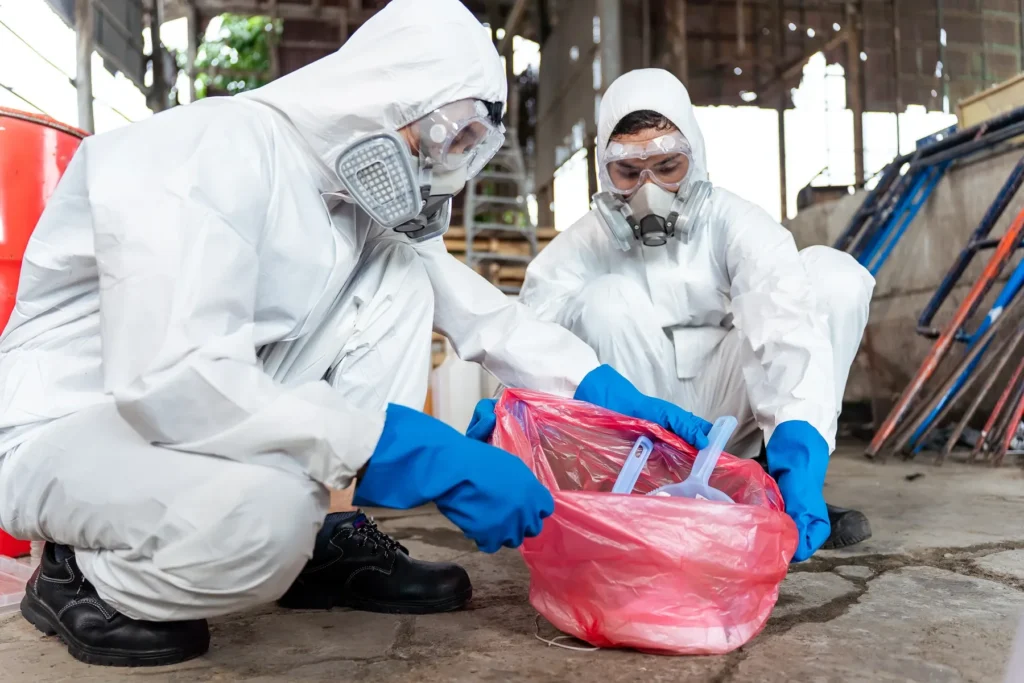
Two people in white protective suits, respirators and blue gloves placing material into a red plastic bag

Drums, IBCs or residues to clear in Manchester?

Tell us what the waste is, how it is contained and roughly how much there is, and we will come back to you.

When a load is rejected

A receiving facility may reject hazardous waste if the description or consignment documentation is incorrect, or if the facility is not authorised to accept it. In England, the carrier must immediately telephone the Environment Agency and contact the producer or holder for further instructions.

The producer or holder must decide whether the waste should go to another authorised receiving site, return to the original premises where permitted, or be offered again to the rejecting facility once the reason for rejection has been addressed. The producer or holder must also telephone the Environment Agency to report that decision. A new consignment note is required, with an R added to the appropriate original or rejection reference.

Returning waste to its original premises is not always permitted, including where waste from different producers has been mixed. The GOV.UK hazardous waste rejected loads guidance explains the requirements for each option. Accurate waste descriptions and suitable receiving facilities help reduce the risk of rejection.

United Utilities and trade effluent

United Utilities is the sewerage undertaker for Greater Manchester. Discharging trade effluent, which may include certain tank washings and process waters, into a public sewer requires the sewerage undertaker’s consent. The composition of the liquid and the conditions of any existing consent are relevant when deciding whether discharge is permitted.

Liquids that cannot be discharged under an appropriate consent may need to be managed as waste. Their composition, contamination and classification determine the collection and disposal arrangements required.

Information needed for hazardous waste collection

For a Manchester business arranging a one-off clearance or regular hazardous waste collections, the following information helps establish the waste type, quantity and collection requirements:

  • Product names or a description of each waste stream and the process that produced it
  • Container types and sizes, including drums, IBCs, jerrycans or smaller packs
  • Approximate quantities and whether the waste is a one-off clearance or arises regularly
  • Container condition, including any damaged packaging or unidentified contents
  • Whether a forklift or pallet truck is available and the vehicle access to the loading point
  • Any safety data sheets, process records or analysis results already available

These details help distinguish straightforward packaged chemical waste from mixed, unidentified or bulk materials that may need additional assessment before collection.

Manchester falls within the Environment Agency’s Greater Manchester, Merseyside and Cheshire area. For other locations, see hazardous waste disposal in Birmingham or our full list of areas we cover.

Hazardous Waste Disposal Manchester: common questions

Are empty chemical drums and IBCs from our Manchester site hazardous waste?

They can be. A container that still holds residue of a hazardous substance may be classified as hazardous waste itself. Thoroughly cleaned containers may be handled differently. Details of what each container last held and how it was emptied or rinsed help establish its correct classification.

We have found old, unlabelled chemicals in a Manchester mill building. What should we do?

Leave them where they are, keep people away from any leaking containers and do not mix or consolidate them. Photograph the store, note any surviving labels or markings and count the containers. Unidentified chemicals need assessment before they can be packed or added to a load.

Can process residues be classified from the safety data sheet?

Not always. The data sheet describes the original product, but a residue from a process may contain other substances or have different properties. WM3 classification looks at the source and composition of the waste itself, and sampling may be needed where records do not settle it.

What happens if a receiving site rejects our hazardous waste?

The carrier must immediately telephone the Environment Agency and contact the producer or holder to explain the rejection. The producer or holder decides whether the waste goes to another authorised facility, returns to the original premises where permitted, or is offered again to the rejecting site. They must telephone the Environment Agency with their decision. A new consignment note is required, with an R suffix on the appropriate reference.

What affects the cost of hazardous waste disposal in Manchester?

Mainly what the waste is and where it can be accepted, how much there is, how it is packed and how easy it is to load. Well-described, segregated waste in sound containers is simpler to handle than unknown or mixed material, which may need assessment or analysis before a facility will take it.

Chemical Waste Disposal

Services

Request a quote

Menu

Get a quote