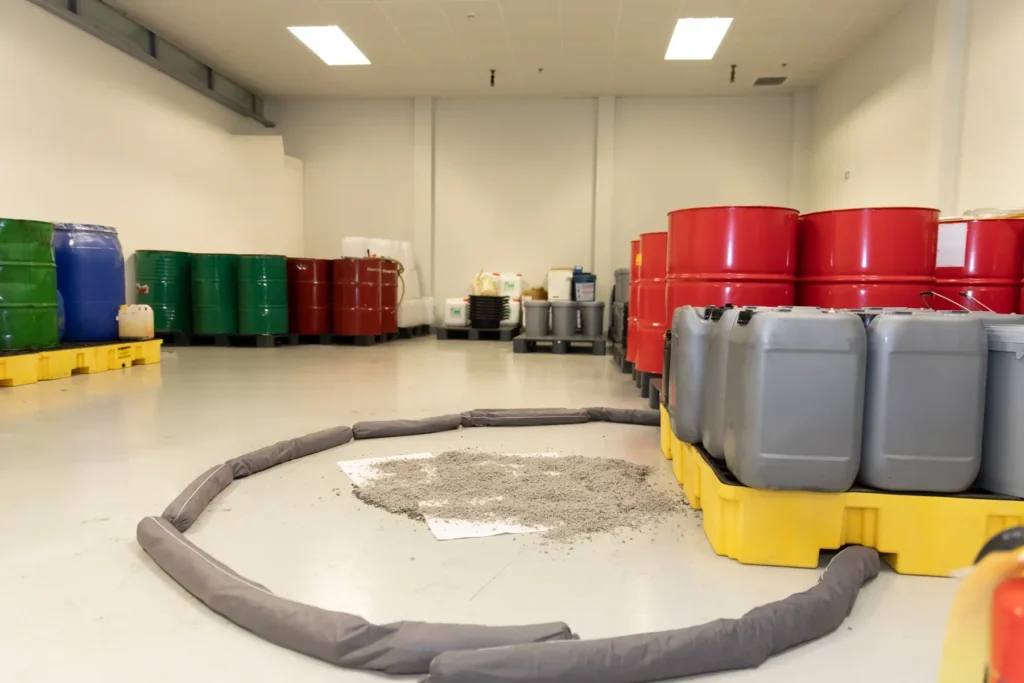
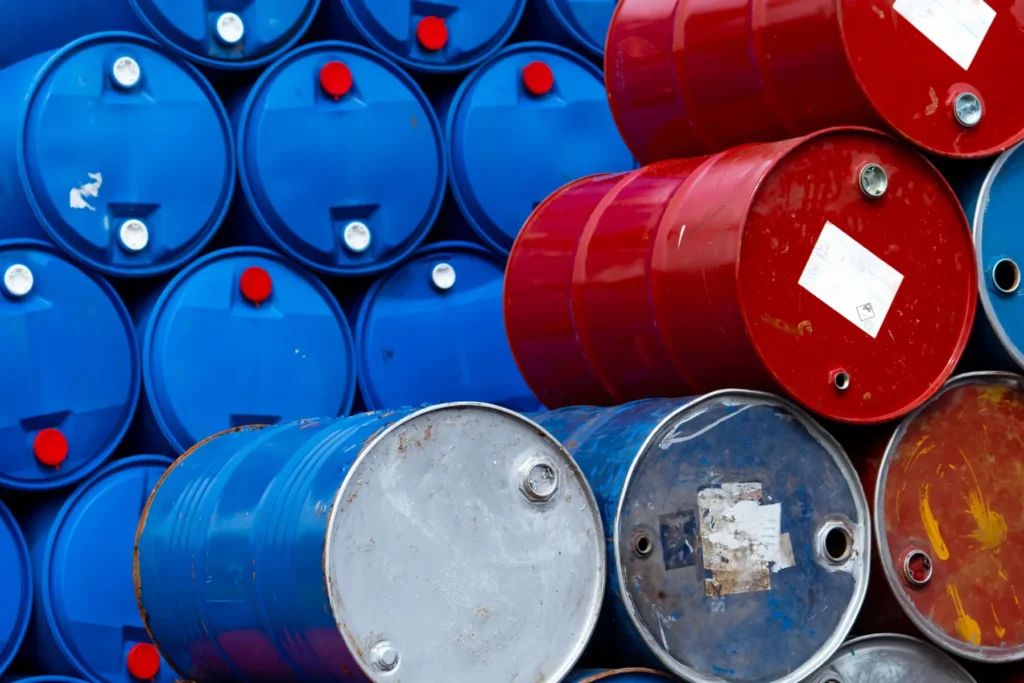
Industrial units and process waste
Production and maintenance work can leave drums, IBCs, tank residues, contaminated washings and chemical sludges requiring disposal. The original process, chemical composition and available product information help establish the correct waste classification.
WM3 technical guidance is used to assess hazardous properties. Landfill waste acceptance criteria testing, commonly called WAC testing, does not determine whether waste is hazardous or non-hazardous. Where the composition is uncertain, appropriate sampling and analysis may be needed before a waste description can be confirmed.
For chemicals already stored in containers, see chemical drum disposal. Container labels, safety data sheets and information about previous contents can help identify material where the original product is no longer obvious.
Preparing chemical waste for collection
A useful waste inventory identifies each material, its approximate quantity and the container holding it. Drums and IBCs should be described by size, contents and condition. For unlabelled containers, explain where the material came from and whether any product records remain available.
Damaged containers, mixed chemical waste and residues left inside equipment may require different collection arrangements. Providing these details helps establish what handling and packaging are appropriate before the waste is moved.
Duty of care in Scotland
The Scottish Government published an updated Duty of Care Code of Practice for managing controlled waste on 24 March 2026, replacing the previous code. Businesses must take appropriate steps to ensure waste is properly managed, including checking the authorisation of the carrier and receiving facility.
Waste carriers operating in Scotland require the relevant SEPA authorisation or registration. Glasgow businesses should also distinguish waste requiring collection from trade effluent discharged to Scottish Water’s sewerage system, which requires the relevant consent.
Information needed to price a collection
- The type of waste, its source and any known chemical constituents
- Approximate quantities and container sizes
- Whether drums, IBCs or other containers are damaged or unlabelled
- Whether different waste streams have been mixed
- Any available safety data sheets, analysis or waste classification records
- Whether the requirement is a one-off clearance or recurring collection
For requirements elsewhere in Scotland, see hazardous waste disposal in Edinburgh or browse the other collection areas.