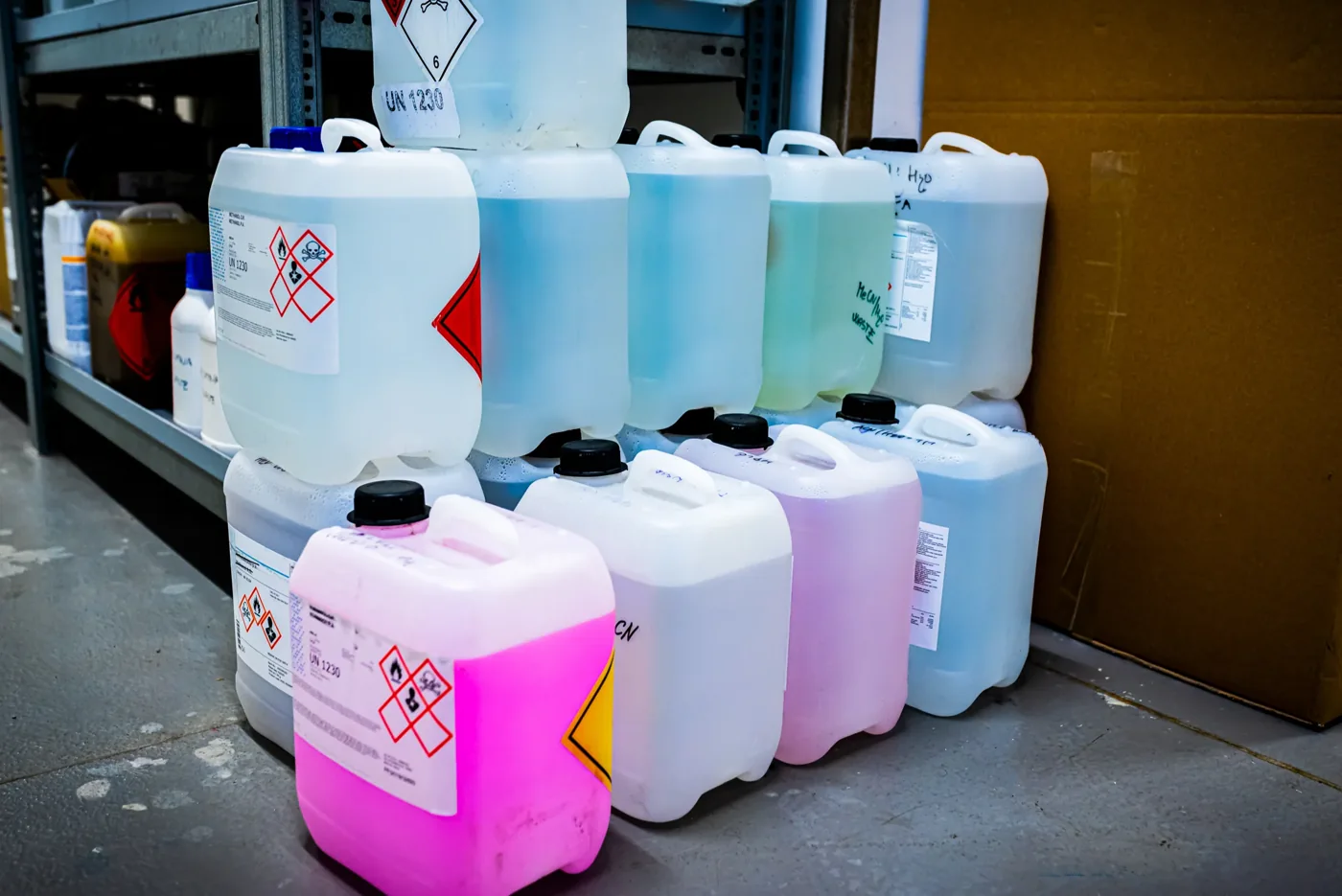
Disposing of part-filled chemical drums requires consideration of both the remaining contents and the container itself. A drum holding several litres of unwanted chemical is not equivalent to an empty, uncontaminated drum. Even a small residue may influence waste classification, packaging, transport and the treatment route.
Before arranging collection, a business should identify what is inside each drum, assess its condition and record where it is stored. These details determine whether the waste can be handled as a known chemical, an uncertain mixture or contaminated packaging.
Why the remaining contents matter
The quantity left inside a drum does not establish whether it is hazardous. A small amount of a substance with hazardous properties may still need controlled handling, while a larger quantity of another material may have a different classification.
The critical information is the identity and condition of the contents. For example, a drum may hold:
- Unused chemical remaining from a production run.
- Spent solvent containing dissolved cleaning residues.
- Waste oil mixed with process contamination.
- Old product whose composition has changed during storage.
- An unidentified liquid left after previous site operations.
These situations cannot automatically share one disposal route simply because the packaging is a steel or plastic drum.
The original label and safety data sheet can help identify a substance. However, a manufacturer’s description of unused product may not accurately describe waste that has been mixed, used or degraded.
Where contents are uncertain, record that uncertainty rather than assigning a familiar chemical name based on colour, odour or the drum’s previous use.
Contamination of the container itself
There is also a distinction between disposing of the liquid contents and managing the packaging once those contents have been removed.
Chemical residues can remain on interior surfaces, around closures and within recesses. Containers with hazardous residues may need classification as contaminated packaging even where little free liquid remains.
A container should not be described as clean merely because it appears empty when viewed from outside. Its previous contents, residual contamination and any suitable cleaning or treatment evidence affect that assessment.
The distinction becomes particularly important where a site has accumulated many drums over several years. Some may contain substantial quantities of liquid, some may have settled sludge and others may be empty but contaminated.
These categories are worth recording separately. The existing contaminated packaging guidance explains the particular issues associated with residual chemical material in waste containers.
How disposal and packaging requirements are established
Waste classification begins with the actual contents and their origin. The resulting classification informs which treatment facilities can receive the material and what documentation is required.
Transport packaging is a separate consideration. The chemical properties, physical condition, quantity and applicable carriage requirements influence whether an existing drum is suitable for collection or whether specialist packaging arrangements are needed.
The following details are useful when assessing a stored drum collection:
- Contents: Chemical identity, process history and approximate volume remaining.
- Drum construction: Material, nominal capacity and closure type.
- Condition: Visible corrosion, deformation, leakage or damaged closures.
- Identification: Whether the drum has a readable label and matching inventory record.
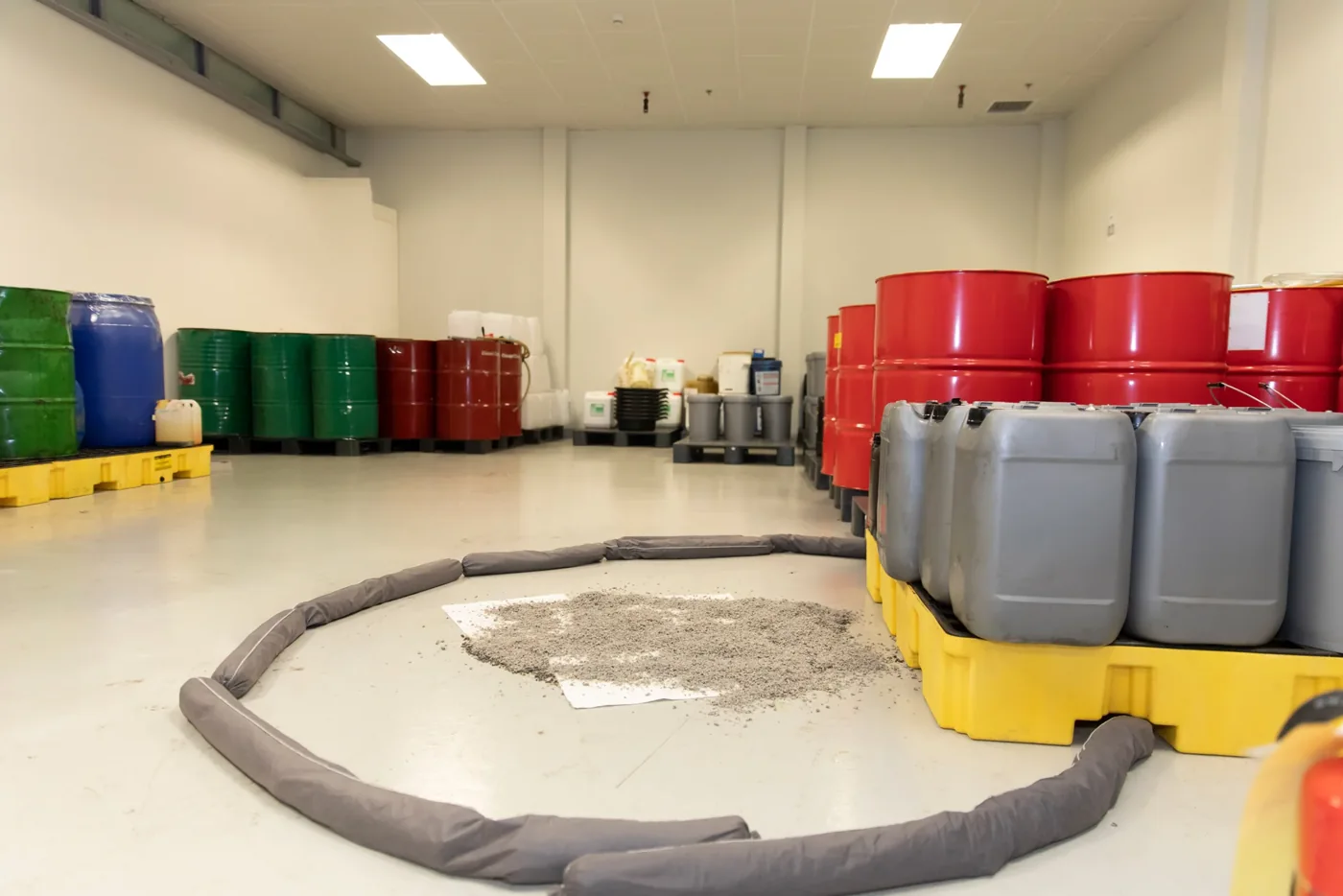
- Storage: Indoor or outdoor location, secondary containment and proximity to other materials.
- Access: Collection route, door widths, stairs, loading arrangements and movement restrictions.
Photographs showing labels, closures and the storage area can help document the condition of the drums without opening or disturbing them.
Preparing a stored drum area for collection
Where possible, maintain an inventory that connects each drum to its recorded contents and location. This is particularly useful in a mixed chemical store, where similar-looking containers may hold incompatible substances.
Drums with visible damage should be identified in the collection information so suitable handling and containment can be assessed before arrival. Moving, opening or transferring uncertain contents simply to make the area look organised can create additional problems.
In England, the GOV.UK guidance on sorting and storing business waste requires secure storage, suitable containers and clear identification of the waste.
For a business planning chemical drum disposal, the most valuable preparation is an accurate account of the remaining contents, condition and physical access. That enables the collection and disposal requirements to be assessed from the actual stored waste rather than the number of drums alone.