Disposal of an unknown laboratory chemical begins with establishing what can reliably be identified about the material, its container and its history. A missing or unreliable label does not provide enough information to select a waste classification or disposal route.
Laboratories can accumulate uncertain materials when staff leave, experiments end, research programmes change or older stores are cleared. Bottles may retain partial labels, handwritten codes or references to records that are no longer readily available.
The assessment needs to distinguish confirmed information from assumptions before decisions are made about movement, packaging or treatment.
Why a missing label matters
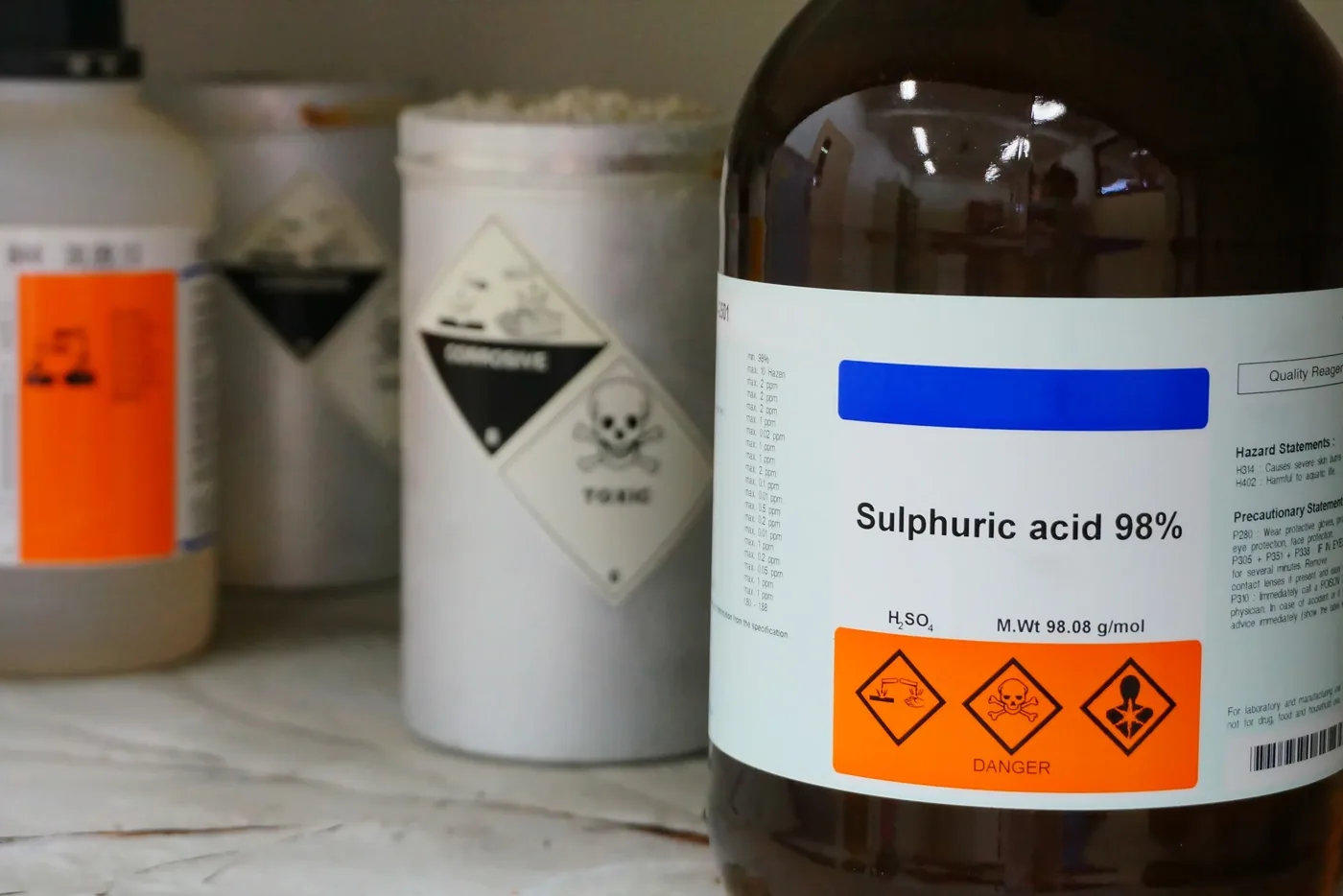
A bottle marked with a chemical name normally provides a starting point for checking composition and associated hazards. An unlabelled bottle removes that starting point.
Even a partial label can be misleading. An abbreviation might refer to several substances, a concentration may have changed, or the container may have been reused for a different preparation.
A laboratory inventory should therefore distinguish between a confirmed chemical identity, a plausible but unverified identity and completely unknown contents.
These are not equivalent descriptions. Treating an assumption as established fact can distort subsequent waste classification and handling decisions.
Visible characteristics such as colour, sediment or container size may be worth recording, but they do not reliably establish a substance’s identity or hazardous properties.
What evidence can help establish the contents?
The most useful evidence often exists in the laboratory’s own records. It may be possible to connect a container with a purchase entry, analytical method, experiment or former stock reference.
Relevant information includes:
- Remaining identification: Any legible product name, reference number, concentration, batch code or original warning label.
- Laboratory records: Stock registers, purchasing histories, experiment notebooks and reagent preparation records.
- Location: The room, cupboard or designated storage area where the container was found.
- Container condition: Visible damage, leakage, residue around the closure or signs that packaging has deteriorated.
- Known use: Whether the material was supplied as an original product or prepared or used during laboratory work.
These details can narrow the uncertainty without requiring staff to guess the contents.
For example, a bottle carrying an old internal code may be traceable to an established preparation record. That evidence is more useful than assuming its identity from the appearance of the liquid.
Where documentary evidence is insufficient, an appropriately competent specialist may need to determine whether further investigation or analytical identification is suitable. The assessment should recognise any hazards associated with an unidentified material rather than relying on informal opening or sampling.
From identification to waste classification
Once enough information is available, the next question is how the material should be described and classified as waste.
The Environment Agency’s waste classification requirements explain that businesses must identify and classify waste before it is collected, recovered or disposed of.
For laboratory chemicals, the classification assessment may need to consider the substance or mixture, its origin, hazardous components and relevant waste code.
An original manufacturer’s safety data sheet can support the assessment if the chemical identity and formulation are established. It cannot independently resolve the contents of an unidentified bottle.
Used preparations may require additional consideration because dissolved samples, reaction products or other constituents can differ from the chemicals originally purchased.
Record uncertainties before arranging removal
For a laboratory clearance, keep a separate inventory entry for each unidentified or uncertain container. Record its location and visible condition, together with the evidence available and the identity questions that remain unresolved.
Do not combine uncertain liquids or reassign labels merely to simplify the store inventory. Separate unresolved items from fully identified stock in the assessment records, while preserving appropriate existing physical segregation.
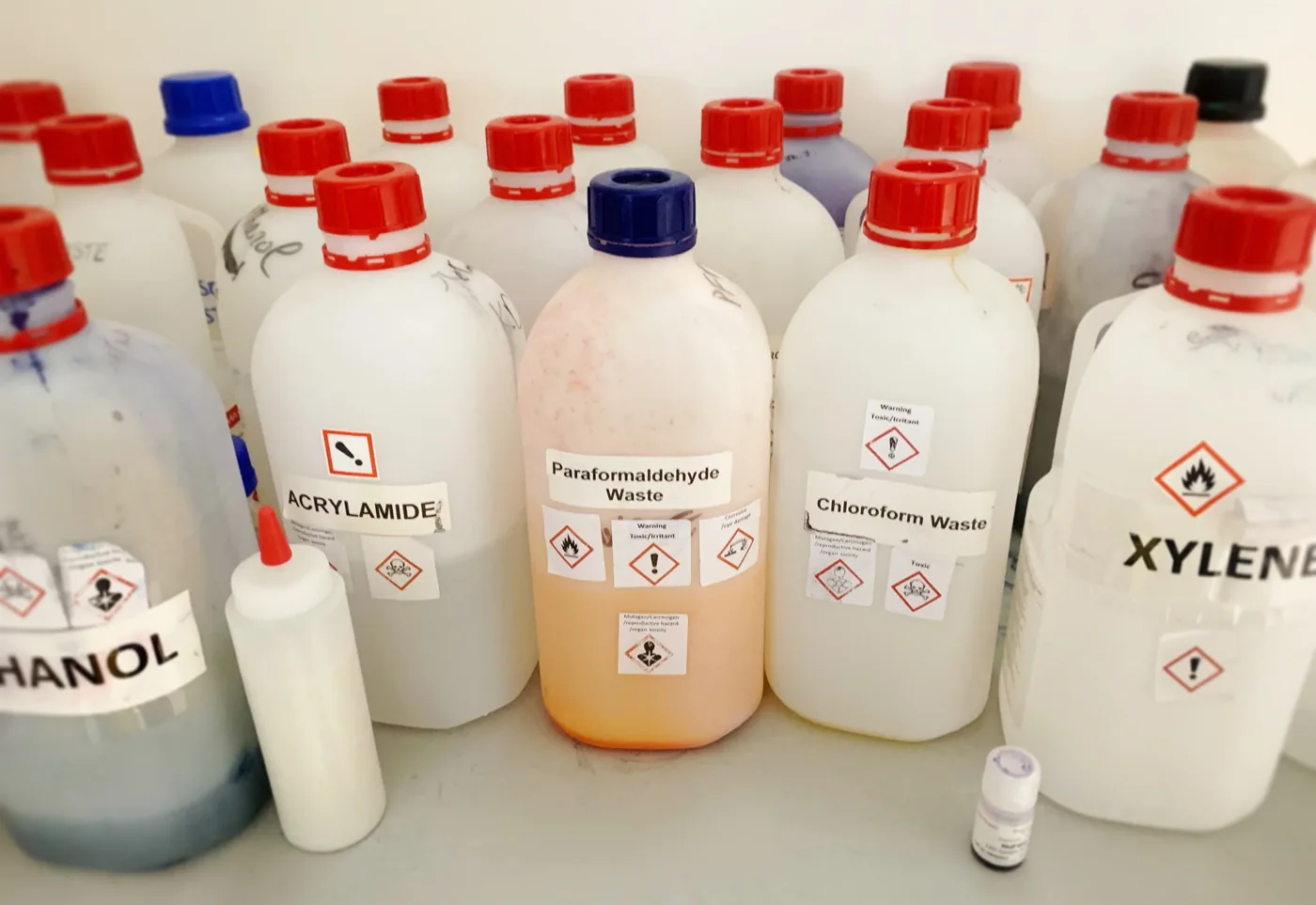
It is also useful to identify which rooms contain numerous small reagent bottles and which contain larger quantities of known waste solutions. These groups may require different assessment and handling arrangements.
When planning laboratory waste disposal, this record helps establish what is known, what remains uncertain and which materials need further technical attention.
For known individual chemicals, the chemical disposal library provides additional substance-specific background.
A satisfactory outcome is not simply a completed bottle count. It is an evidence-based description that allows each waste material to be considered without concealing uncertainty about its identity.