After a chemical spill has been contained, the remaining liquid, used absorbents and contaminated debris must be assessed as waste before removal. Materials used to control the incident should not automatically go into general cleaning rubbish, because contamination can change their classification and the treatment they require.
The next stage is to identify the released substance, establish which materials were affected and determine how the resulting waste streams should be stored and removed.
Record the released chemical and affected materials
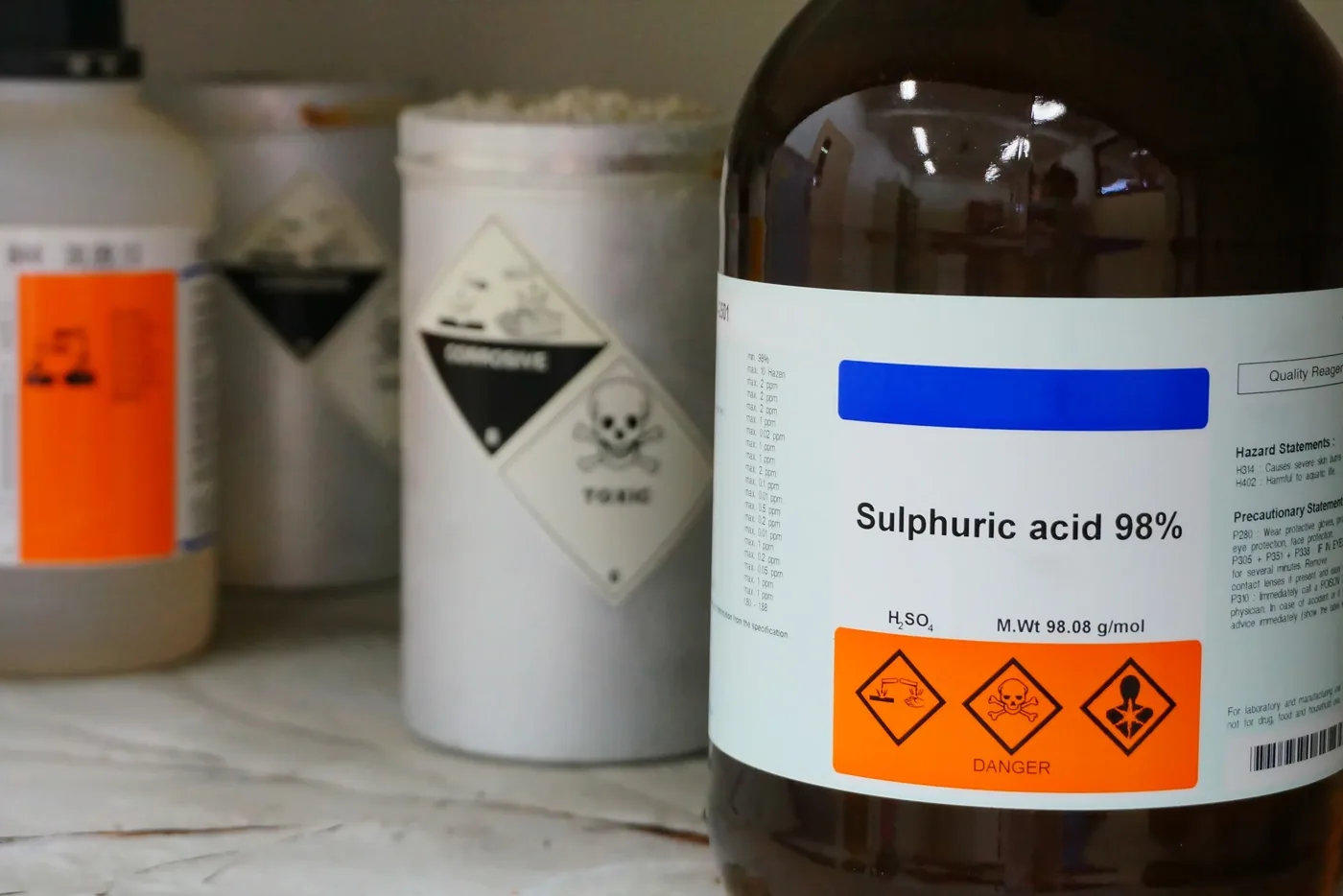
Start with the substance involved in the spill. Its identity, concentration and approximate released quantity help establish what may now be present in the recovered material.
For example, a contained solvent spill on a sealed factory floor may produce liquid waste and contaminated absorbents. A spill involving a concentrated cleaning product could leave different residues, while an incident affecting stored powders may generate contaminated sweepings or damaged packaging.
Useful incident information includes:
- The chemical name, product identification and available safety data sheet.
- The estimated volume or mass released and quantity recovered.
- The location and surfaces affected.
- The absorbents, barriers or other materials used during containment.
- Whether water, detergents or other substances were introduced during the response.
- Any drains, unsealed ground or adjacent storage areas potentially affected.
Where a release involved several substances, the resulting waste description needs to account for the mixture rather than treating it as a single original product.
Record uncertainty where the chemical identity or extent of contamination has not been established. Unsupported assumptions can lead to an unsuitable disposal route.
Separate contaminated absorbents and debris
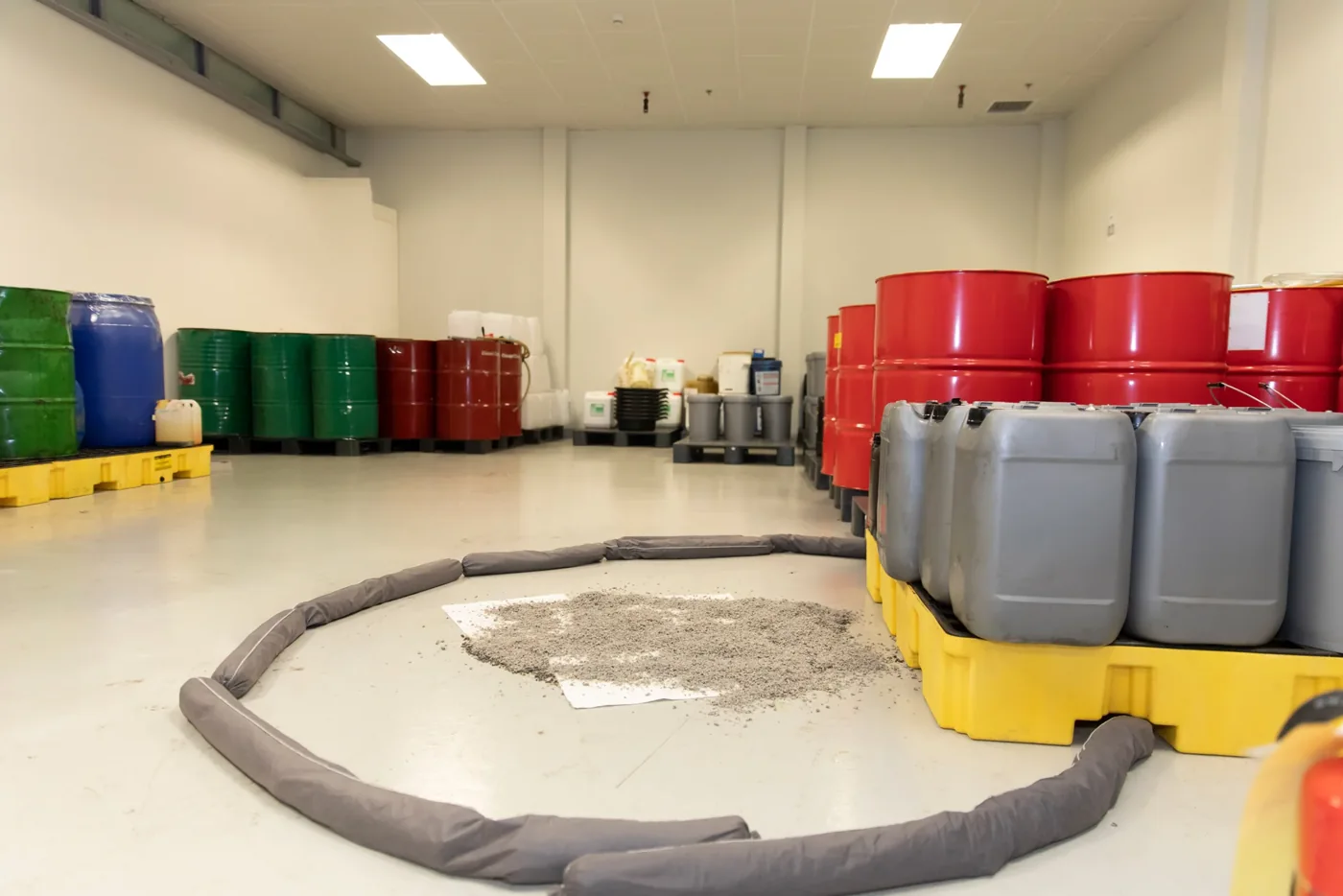
Once containment work has finished, a site may be left with several distinct types of waste. They should be identified before deciding whether they can share a collection container or treatment route.
Typical post-containment material includes:
- Recovered liquid: The released chemical, potentially mixed with other substances or collected water.
- Used absorbents: Pads, granules, socks or other material carrying chemical residue.
- Contaminated debris: Damaged packaging, disposable equipment or materials affected during the incident.
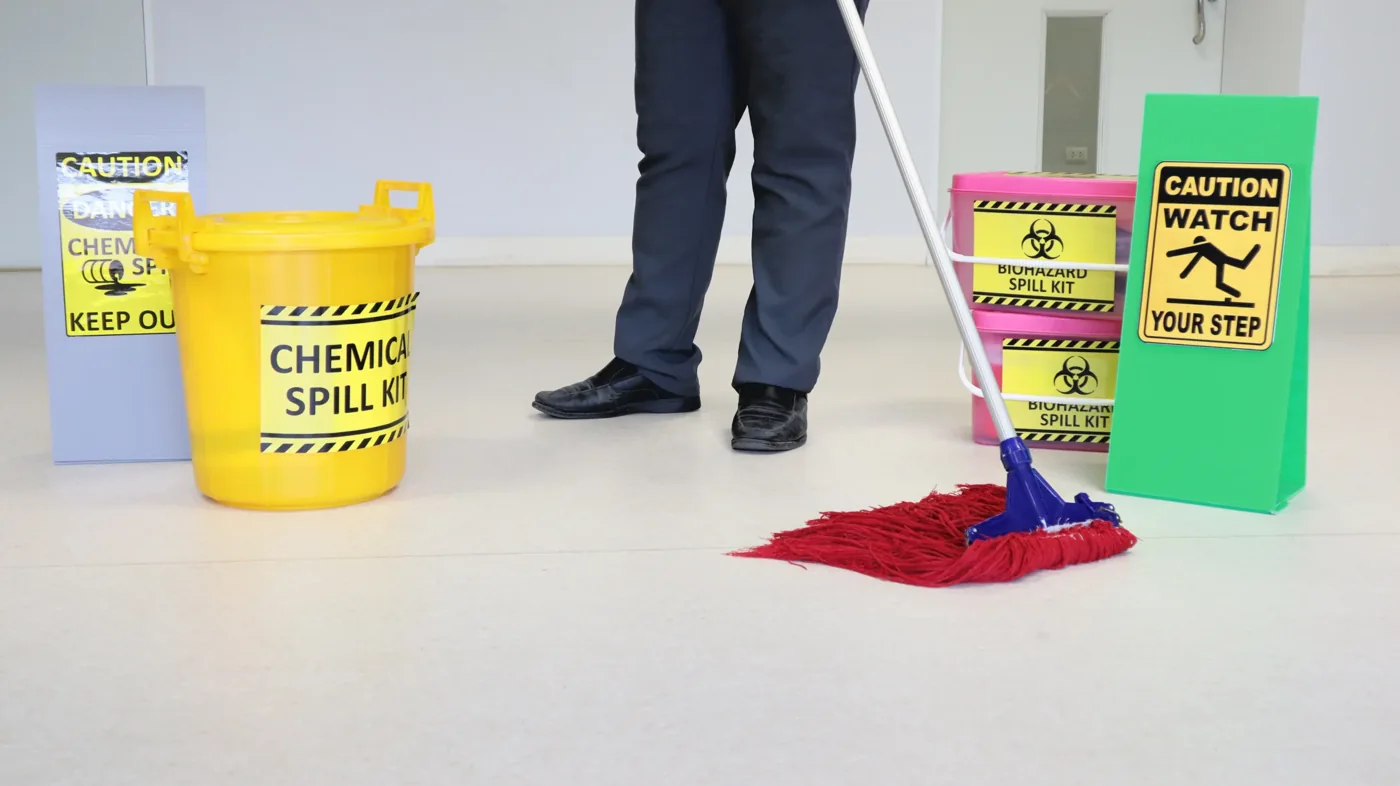
- Cleaning residues: Liquids or solids generated by subsequent cleaning where they contain spill contamination.
The hazardous status of an absorbent depends on its contamination and the applicable waste classification, not simply the fact that it was used during a spill.
The Environment Agency’s waste classification guidance requires businesses to identify their waste and its hazardous properties before collection or disposal.
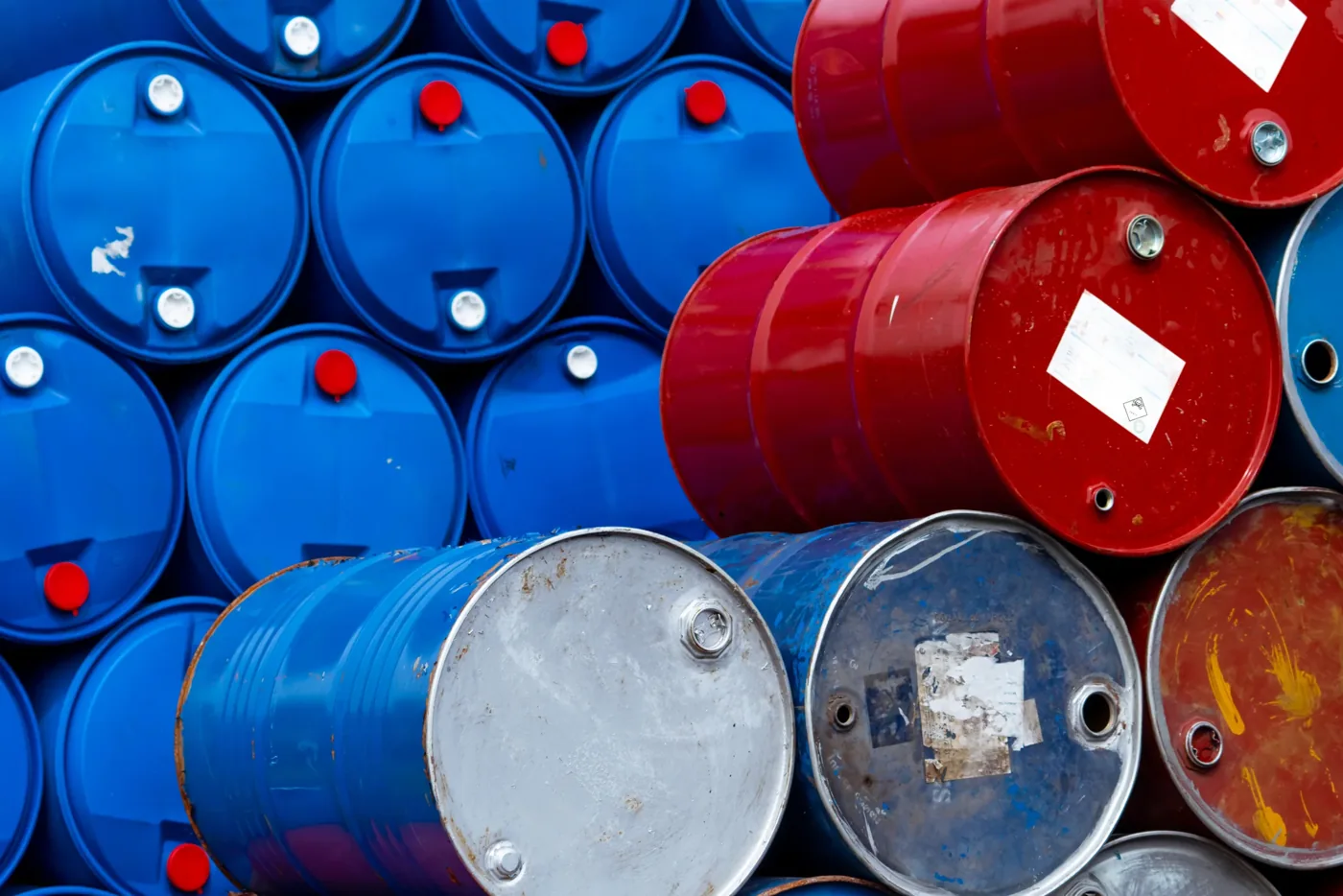
Keeping distinguishable material streams separate also allows their quantities and treatment requirements to be recorded accurately. Hazardous waste must not be mixed with non-hazardous waste or other hazardous waste categories unless specifically authorised. Separate containers should be suitable for their contents, clearly identified and protected against leaks.
Consider drainage and affected ground
Containment of a visible spill does not always establish that every pollution pathway has been addressed. Review where the chemical travelled and whether it approached a surface water drain, soakaway or unsealed ground.
Surface water drainage can carry pollutants directly into the environment. A spill that reached a drainage system may therefore require a different assessment from one confined to an impermeable surface.
The GOV.UK pollution prevention guidance for businesses explains the significance of drainage routes and requires immediate notification to the Environment Agency where polluting material has entered or could enter a watercourse or soak into the ground.
Where contamination may extend beneath the visible surface or into drainage infrastructure, further investigation may be necessary to establish what additional waste or remedial work is involved.
Do not assume all affected material has been captured merely because the original liquid is no longer visible.
Prepare the post-containment waste removal information
For collection planning, the most useful record combines the chemical details with a description of the waste actually remaining on site.
Identify each collection stream, estimate its quantity, describe its containment and record where it is stored. Include photographs showing the remaining waste, its containers and storage location, together with any visible damage or access restrictions relevant to collection.
When a spill creates an urgent removal requirement, clarify whether the incident is fully contained and whether further containment or cleaning work remains outstanding. These are different operational requirements.
For help arranging removal of residues after a contained incident, see our chemical spill cleanup service.
Each waste stream needs an appropriate classification code and description for the relevant waste transfer or hazardous waste consignment paperwork. Check that the waste carrier is registered and the receiving facility is authorised to accept the material. The final waste route must reflect the actual residues, absorbents and debris produced, rather than relying solely on the original chemical name.